


33 Alfred Street stands as one of Sydney's most iconic assets. Located by the harbour at Circular Quay, it offers expansive, never-to-be-built-out views and a commanding presence in the city skyline. Originally opened in 1962 by Prime Minister Sir Robert Menzies, it was celebrated as Australia’s tallest building at the time and is often dubbed Sydney’s first skyscraper. Its opening marked a bold new chapter in post-war architectural innovation, as it became renowned for its gold glass tartan façade, and public artworks such as the Tom Bass sculpture and Michael Santy mosaics. Today, it’s a symbol of ambition and progress as part of the wider, transformative Quay Quarter Sydney precinct, and the building itself has undergone a meticulous renewal.
Heritage icon meets workplace of the future
The redevelopment of 33 Alfred Street was driven by a clear ambition: to reimagine a landmark for the future of work while preserving its architectural legacy. This vision demanded a nuanced approach - one that honoured the building’s historical significance while embracing the evolving needs of contemporary tenants. The result is a workplace that seamlessly integrates heritage charm with premium flexibility, sustainability and technology. It is a place where the past and future coexist, offering a compelling proposition for discerning occupiers.
The transformation of 33 Alfred Street was the culmination of more than a decade of planning and a thorough three-year refurbishment program. Working with Urbis as the heritage consultant, the redevelopment was guided by a rigorous framework of heritage approvals and conservation planning. As a listed local heritage item (I1662) under the Sydney Local Environmental Plan (SLEP) 2012 and newly added to the NSW State Heritage Register during its refurbishment, the building’s renewal was subject to the Heritage Act 1977 (NSW), requiring approval from the NSW Heritage Council for integrated development applications. A Heritage Impact Statement (HIS) and Conservation Management Plan (CMP) were submitted and endorsed by the City of Sydney Council, ensuring that all interventions were sensitive to the building’s historical significance.
The redevelopment process was both intricate and ambitious. It began with the careful soft and hard demolition of existing fit outs, finishes, façade and services, all carried out under a protective scaffolding structure supported by structural steel and back propping. This enabled the preservation of key heritage elements while allowing for the installation of over 5,000 specially designed façade panels. These panels were custom-engineered to retain the building’s iconic gold and aluminium curtain wall aesthetic while improving thermal performance, increasing natural light, reducing glare and enhancing views of Sydney Harbour. The building’s distinctive dual crescent shape and golden glass tartan façade were retained and enhanced in order to celebrate its Modernist origin and reinforcing its identity as a cultural and architectural icon. By retaining the existing structure, the project reduced embodied carbon significantly, minimised landfill and extended the building’s lifecycle.
Over 75,000 tiles were sourced from Koninklijke Tichelaar B.V. in the Netherlands to reflect the original iridescent sheen of the façade to maintain its material authenticity. The restoration extended to the building’s artistic features, including the Michael Santy mosaics and the Amicus sculpture on the western façade, as well as the Tom Bass sculpture, all of which were preserved and restored as part of the conservation effort.
Internally, the ground floor was transformed into a refined, modernist-inspired lobby, while Level 1 is a secondary lobby, housing public art and connected to the ground floor by escalators. These enhancements were designed to improve the building’s interface with the public realm while integrating new amenities in a way that respected and enhanced its character.
Sustainability and technology were also central to the redevelopment. The building is targeting a 5.5-star NABERS Energy rating, a 4.5-star NABERS Water rating, a 6 Star Green Star – Office As Built v3 rating and a Premium-grade classification. Additional initiatives include a 80kW rooftop solar PV system, rainwater harvesting for onsite reuse, a high-performance façade to maximise energy efficiency, and an Integrated Building Platform that consolidates all monitoring and control systems through smart metering.
The power of precinct: The final piece of Quay Quarter Sydney
In a market where ‘sameness’ no longer cuts it; well-designed precincts offer a clear edge: they’re places people want to be. For investors, they deliver stronger long-term returns and attract resilient tenants who are seeking to align their brand with that of a premium grade building with character. For developers, thoughtful placemaking and genuine community engagement can fast-track approvals, reduce risk, and unlock capital by proving the value of the vision early. And for occupiers, precincts rich in amenity, culture and connection turn the workplace into a drawcard - boosting talent attraction, brand impact and employee wellbeing.
As the final piece of the Quay Quarter Sydney precinct, 33 Alfred Street plays a pivotal role in completing a vision that spans two city blocks. Its renewal enhances the precinct’s vibrancy, connectivity and activation, linking seamlessly with the award-winning Quay Quarter Tower and the laneway retail experience of Quay Quarter Lanes. Quay Quarter Lanes was the first stage of the precinct to come to life with three new residential and retail buildings, along with two beautiful historic wool stores - Hinchcliff House and the Gallipoli Memorial Club - that have been completely refurbished. Simultaneously, place activation and customer service strategies are focused on delivering on the development vision for the precinct to become a new neighbourhood and cultural destination in Sydney. This includes a comprehensive heritage interpretation and public art strategy reflecting the site’s Indigenous and Colonial history and future including five works by Wiradjuri/Kamilaroi artist Jonathan Jones and a significant sculpture by Danish-Icelandic artist Olafur Eliasson located in the podium.
The surrounding Circular Quay area previously offered little in terms of public amenity for office workers. The vision of the wider project was therefore to inject life into the precinct and create a livelier and more engaging public realm. This aligned with Transport for NSW's major Circular Quay Renewal project to revitalise Circular Quay’s transport interchange and surrounding public spaces. The wider Circular Quay project has received financial backing from both the Federal and State Governments in a bid to enhance accessibility, enrich the visitor and commuter experience, and create a vibrant, sustainable public domain that reflects the area’s national and international significance.
Together, these assets offer a dynamic mix of workplace architecture, curated retail, and lifestyle amenities. With more than 35 cafes, bars, restaurants and wellness outlets, the precinct has become a destination and one that reflects the evolving expectations of city workers and visitors.
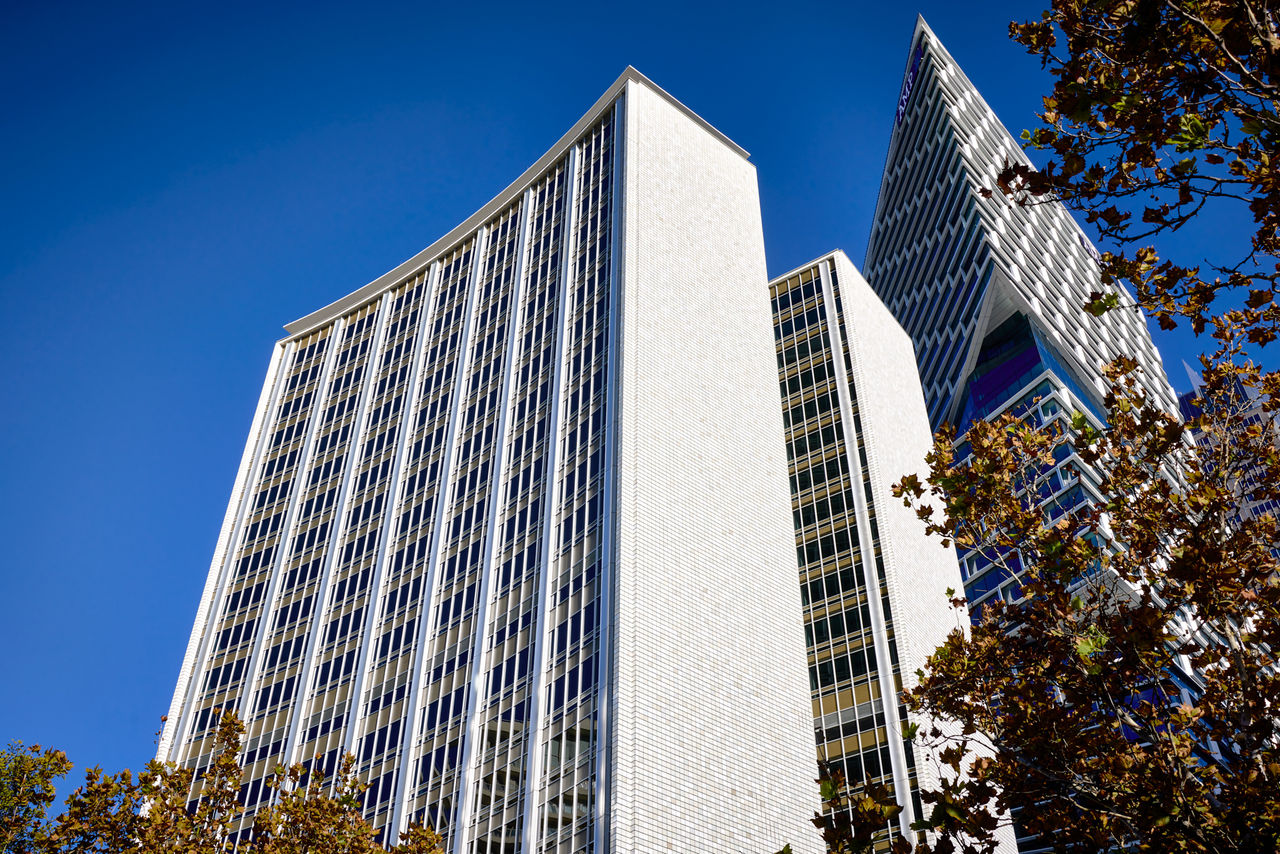 33 Alfred Street, Sydney NSW
Sydney’s new Legal hub
For the first time in its history, tenants outside of AMP have been welcomed into 33 Alfred St, marking a significant shift in its occupancy profile and opening the doors to a broader community of leading firms. Through 33 Alfred Street’s transformation, it has evolved into a true legal hub within the Sydney CBD. Its appeal to law firms lies in a unique blend of heritage, discretion, and proximity to financial services in the tightly held Circular Quay core. The building’s exclusivity and brand presence on the Quay further elevate its appeal, making it a compelling choice for firms seeking a distinctive and future-ready address.
The occupiers benefit from being part of the Quay Quarter Sydney precinct while still maintaining its own distinct identity, with a separate lobby, address, and end-of-trip facilities that reinforce its boutique appeal. This balance between integration and independence is particularly attractive to tenants seeking prestige and privacy of a boutique building. Simultaneously, the building’s architectural legacy resonated with firms like Allens (Australia’s first law firm) and A&O Shearman, whose histories and brand identities align with the status of the asset.
While the broader precinct offering is undeniably a major drawcard for 33 Alfred, one of the most pivotal elements in the building’s leasing success has been the transformation of the façade. Replacing the original small windows with a floor-to-ceiling glazed design not only elevated the internal experience and maximised the views - which are critical from a leasing perspective - but did so in a way that respected and enhanced the building’s heritage character. It’s a standout example of design-led repositioning that directly contributed to tenant appeal. The never-to-be-built-out outlook over Sydney Harbour, with these floor-to-ceiling glass and light-filled interiors, truly bolsters the experience for its occupiers.
The building’s success is emblematic of the broader “flight to quality” trend in Sydney’s office market. CBRE’s Mind the (office) gap research highlights a growing appetite for premium space, with tenants paying up to 60% more for high-rise floors offering expansive views, particularly in the CBD’s Core precinct. 33 Alfred Street has been a beneficiary of this demand, achieving rents above feasibility estimates on its upper floors. Its ability to offer bespoke layouts, discretion, and view-rich spaces has made it a standout option in a market where premium supply is increasingly scarce.
Sydney’s CBD is facing a constrained supply pipeline, especially for Premium grade assets with views in the financial core. According to Dexus’s latest Australian Real Asset Review1, vacancy rates in Premium grade buildings have dropped to 10.7%, well below the total market vacancy of 14.9%. 33 Alfred Street opened its doors with 93% of its floors leased upon completion. This scarcity is underscored by the limited opportunities to develop new assets in this area of Sydney CBD, with few alternatives earmarked for future delivery that offer similar prestige.
33 Alfred Street was formally reopened by The Honourable Chris Minns, Premier of NSW, alongside senior leaders from Dexus and Mirvac, on 06 June 2025. The asset is co-owned by Dexus Wholesale Property Fund and Mirvac Wholesale Office Fund.
[1] Australian Real Asset Review Q4 2025, Dexus
Discover more

Unlocking potential with Boral at Ravenhall
Inside the Dexus-Boral partnership and plans for a 630-hectare industrial precinct in Melbourne's western corridor.
02 Sep 2026

Elements arrives at 80 Collins
Elements has opened at 80 Collins Street - a purpose-built wellness destination exclusive to customers within the precinct.
04 Aug 2026

From port to promenade: Brisbane's riverfront and a 170-year evolution
From bustling port to vibrant promenade, Brisbane’s Eagle Street evolves at Waterfront Brisbane - a six-metre riverwalk reconnecting the CBD and drawing thousands to the river.
01 Jul 2026

How Te Rua’s digital twin is reshaping public infrastructure delivery
The Te Rua Archives building in Wellington stands as a landmark for safeguarding Aotearoa New Zealand's documentary heritage, but behind its walls lies an equally impressive digital infrastructure that has shaped the facility from design through to operation.
20 Apr 2026

Quay Quarter Tower listed a 2025 finalist in The Earthshot Prize
Quay Quarter Tower (QQT), located in Sydney and Dexus’s Australian headquarters, has been named a 2025 finalist for The Earthshot Prize - the world’s most prestigious and impactful environmental award
13 Oct 2025

Theatre Royal milestone cements 25 Martin Place as cultural CBD hub
The 25 Martin Place precinct has cemented its status as a cultural and commercial powerhouse in Sydney’s CBD, with Theatre Royal Sydney surpassing one million ticket sales since reopening in 2021.
08 Aug 2025

The opportunity in student accommodation
Ranked as the second most desirable location to study globally, Australia’s tertiary education sector has seen unprecedented demand from international students in the last year.
30 May 2024
How can we help?
Connect with us to explore investment opportunities, find the right space for your best work or learn more about what we do. Together, let’s create tomorrow.